Can Dogs Eat Carrots? The Cheapest Low-Calorie Crunch (2026)
Posted on June 13, 2026 • 6 min read • 1,076 words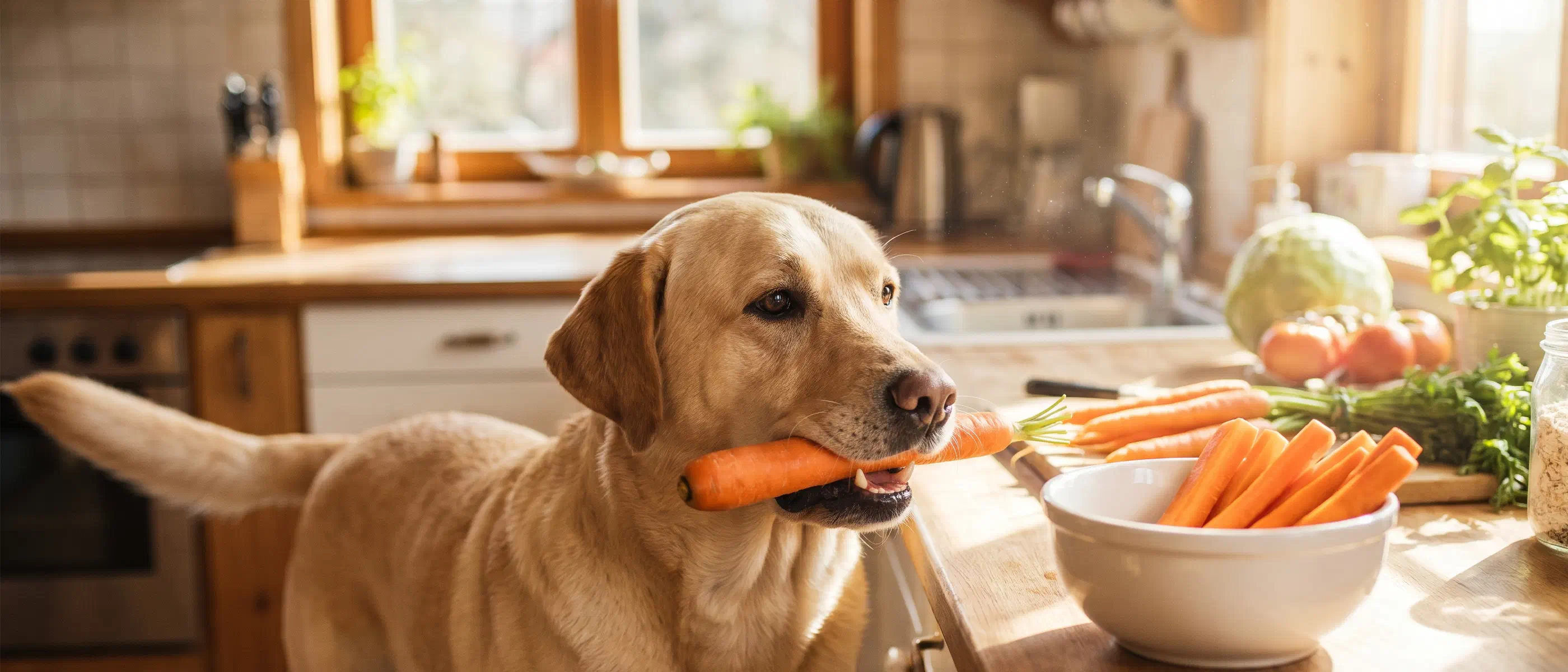
This post contains affiliate links. If you purchase through these links, we earn a small commission at no extra cost to you. Learn more.
If there is a perfect budget treat for dogs, it might just be the humble carrot. Cheap, sitting in almost every fridge, low in calories, and naturally satisfying to crunch, carrots tick boxes that expensive packaged treats often miss. Most dogs genuinely love them, and you can feel good about every bite.
The short version: yes, dogs can eat carrots, raw or cooked, and they are one of the healthiest and most economical treats around. In this guide we will cover the benefits, how much to give, the simple safety tip that keeps them choke-free, and why a frozen carrot is a teething puppy’s best friend.
Can Dogs Eat Carrots? The Short Answer
Carrots are completely safe for dogs and genuinely good for them. They are low in calories, high in fibre and beta-carotene, and gentle on the stomach, which is why they are one of the most commonly recommended “people food” treats.
The only thing to manage is size. A whole carrot or a large chunk can be a choking hazard for some dogs, so cutting them appropriately is all the preparation you need. Do that, and carrots are about as safe and wholesome a treat as you will find.
Why Carrots Are Such a Smart Treat
Carrots deliver a lot of value for almost no cost or calories:
- Low in calories, making them an ideal reward for dogs watching their weight, right alongside our other best low-calorie dog treats.
- High in fibre, which supports healthy digestion.
- Rich in beta-carotene and vitamin A, which support healthy vision, skin, and coat.
- Naturally crunchy, which can help scrape away soft plaque as your dog chews.
That crunch is a real bonus. While a carrot is no substitute for proper dental care, gnawing on a firm raw carrot gives the teeth and gums a gentle workout, a little like a low-calorie natural chew.
Because carrots are a clean, single-ingredient food, they also suit dogs on simple diets, in the same spirit as our guide to the best single-ingredient dog treats.
How Many Carrots Can a Dog Eat?
Even a healthy treat follows the 10 percent rule: treats should be no more than 10 percent of your dog’s daily calories. Carrots are low-calorie, so there is some flexibility, but balance still matters.
As a rough serving guide:
- Small dogs: a few small pieces or baby carrots, occasionally.
- Medium dogs: half a medium carrot, in pieces.
- Large dogs: one small-to-medium carrot, in pieces.
Carrots do contain natural sugar, so they are a treat rather than an all-day snack. Too many at once can cause a little digestive upset, so start modestly and build up.
For ready-made convenience, a bag of dehydrated carrot or vegetable dog chews gives you the same wholesome crunch in a longer-lasting form, and they are easy to portion for training.
The Simple Safety Tip: Size Matters
The only real risk with carrots is choking, and it is entirely avoidable. A whole carrot, or a thick round coin-shaped slice, can lodge in the throat of an eager dog.
The fix is easy: cut carrots into appropriate sizes for your dog. Think small sticks or chunks for big dogs, and small pieces for little ones. Avoid round “coin” slices, which are exactly the wrong shape, and always supervise your dog while they enjoy their carrot.
For training, tiny diced pieces work brilliantly as a low-calorie reward, much like the small high-value options in our guide to the best dog training treats.
Frozen Carrots: A Teething Puppy’s Best Friend
Here is a tip every puppy owner should know. A cold or frozen carrot is a wonderfully soothing chew for a teething puppy. The cold helps numb sore gums while the firm texture gives those needle-sharp new teeth something appropriate to work on, instead of your furniture.
Simply pop a whole large carrot (sized so your puppy cannot swallow it) in the freezer and offer it under supervision. It is cheap, natural, mess-light, and it works. For more cooling ideas, our quick and easy frozen dog treat recipes are worth a look.
When to Be Careful With Carrots
Carrots are gentle, but a few notes:
- Always cut to size. Whole carrots and coin slices are choking hazards. Stick to sticks, chunks, or small pieces.
- Introduce gradually. Too much fibre at once can cause gas or loose stool.
- Plain only. Skip carrots cooked in butter, oil, salt, or seasoning, and never offer carrot cake or anything sweetened.
Frequently Asked Questions
Are carrots good for dogs?
Yes. Carrots are low in calories and high in fibre, beta-carotene, and vitamin A. The crunch of a raw carrot can even help scrape away soft plaque, making them a cheap, healthy treat and a natural chew.
Can dogs eat raw carrots?
Yes. Both raw and cooked carrots are safe for dogs. Raw carrots offer a satisfying crunch that supports dental health, while cooked carrots are softer and easier to digest. Always cut them to a safe size.
How many carrots can a dog eat?
One small-to-medium carrot a day, or the equivalent in pieces, is plenty for most dogs. Keep carrots within the 10 percent treat rule and cut them into appropriate sizes to avoid choking.
Are carrots good for a dog’s teeth?
Chewing a firm raw carrot can help scrape away soft plaque and massage the gums, which supports dental health. They are not a replacement for proper dental care, but they are a healthy, natural chew.
Can puppies eat carrots?
Yes. A cold or frozen carrot can be soothing for a teething puppy’s sore gums, and it is a healthy, low-calorie treat. Cut it to a safe size and supervise your puppy while they chew.
Conclusion
So, can dogs eat carrots? Absolutely, and they may be the best-value healthy treat you can give. Low in calories, rich in fibre and vitamins, kind to the teeth, and loved by most dogs, carrots are a treat you never have to feel guilty about.
Just cut them to a safe size, keep within the 10 percent treat rule, and try a frozen one for a teething puppy. For more everyday safe-treat questions, our guides to whether dogs can eat watermelon, blueberries, pumpkin, and peanut butter complete the healthy-snack picture.