Can Dogs Eat Peanut Butter? The Xylitol Rule Every Owner Must Know (2026)
Posted on June 8, 2026 • 7 min read • 1,326 words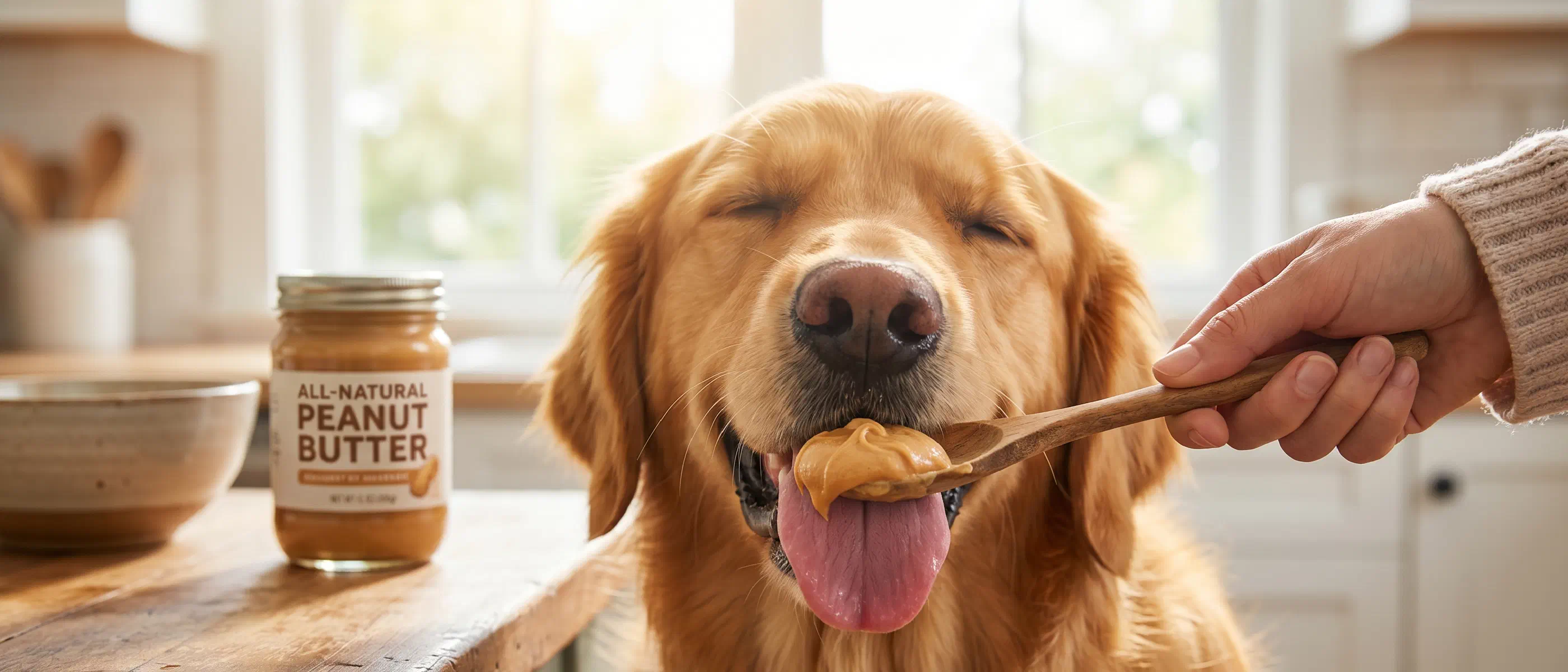
This post contains affiliate links. If you purchase through these links, we earn a small commission at no extra cost to you. Learn more.
Peanut butter is one of the most beloved treats you can give a dog. The moment the jar comes out, most dogs are sitting, drooling, and giving you their very best behavior. It is the classic way to hide a pill, fill a chew toy, or reward a hard-won trick. But there is one ingredient hiding in some peanut butters that turns this happy treat into a genuine emergency, and far too many loving owners have never heard of it.
The short version: yes, dogs can safely eat peanut butter, and most of them adore it. The catch is that you have to read the label first. In this guide we will cover exactly why peanut butter is usually safe, the single ingredient that can be fatal, how much is too much, and which peanut butters are the safest choice for your dog.
Can Dogs Eat Peanut Butter? The Short Answer
Plain peanut butter is not toxic to dogs. It is a good source of protein, healthy fats, vitamin B, vitamin E, and niacin, and most dogs can enjoy it in moderation without any problem. That is why it shows up in so many homemade dog treats and why it works so well for stuffing a chew toy.
The problem is never the peanuts themselves. The problem is what manufacturers sometimes add to the jar: salt, sugar, hydrogenated oils, and one sweetener in particular that is deeply dangerous to dogs. So while the answer to “can dogs eat peanut butter” is yes, the more important question is “which peanut butter,” and that comes down to one word.
The One Ingredient That Can Kill Your Dog: Xylitol
Xylitol is a sugar substitute used in many “sugar-free,” “no sugar added,” and “natural” products. It is perfectly safe for people, which is exactly why it is so dangerous: owners assume that anything safe for them is safe for their dog. It is not. Xylitol is one of the most toxic common household substances for dogs.
When a dog eats xylitol, their body mistakes it for real sugar and releases a flood of insulin. That insulin causes their blood sugar to crash, a condition called hypoglycemia, often within 10 to 60 minutes. Larger amounts can also cause acute liver failure. Symptoms include weakness, staggering, vomiting, tremors, and collapse. This is a veterinary emergency, and even a small amount can be life-threatening.
Xylitol increasingly appears in “healthy” and diet-style peanut butters, so a jar marketed as sugar-free is exactly the kind you must check most carefully. For a fuller picture of household items that are dangerous to dogs, our guide to toxic foods for dogs is worth keeping bookmarked.
How to Check a Label for Xylitol
Before any peanut butter goes near your dog, read the full ingredient list, not just the front of the jar. Xylitol can hide under several names:
- Xylitol (the most common label name)
- Birch sugar or birch sap
- Wood sugar
- E967 (an additive code)
It also helps to be wary of anything labeled “sugar-free,” “no sugar added,” “keto-friendly,” or “diet,” because these are the products most likely to use a sugar substitute. If a label lists any sweetener you do not recognize, do not risk it. When in doubt, choose a peanut butter made specifically for dogs.
Health Benefits of Peanut Butter for Dogs
Given as an occasional treat, plain peanut butter offers some genuine benefits:
- Protein to support muscles and overall body condition.
- Healthy fats that support a shiny coat and healthy skin.
- Vitamins B and E, which support metabolism and the immune system.
- High palatability, which makes it one of the best tools for hiding medication or motivating a nervous or picky eater.
That high-value taste is also why peanut butter is such an effective training reward. A tiny smear on a spoon can keep a dog focused through a tough training session, much like the high-value options in our guide to the best dog training treats.
How Much Peanut Butter Can a Dog Eat?
The golden rule for any treat is the 10 percent rule: treats, including peanut butter, should make up no more than 10 percent of your dog’s daily calories. The rest should come from a complete, balanced diet.
Peanut butter is calorie-dense and high in fat, so a little goes a long way. As a rough guide:
- Small dogs: no more than half a teaspoon, occasionally.
- Medium dogs: up to one teaspoon, occasionally.
- Large dogs: up to one tablespoon, occasionally.
Too much peanut butter can lead to weight gain and, in some dogs, can trigger pancreatitis, a painful inflammation of the pancreas linked to high-fat foods. If your dog is overweight or watching their figure, you may prefer a lighter reward from our guide to the best low-calorie dog treats.
The Safest Peanut Butter for Dogs
The single safest option is a peanut butter made specifically for dogs, because you know it contains no xylitol, no added salt, and no junk. These dog-specific spreads, such as Poochie Butter and other dog peanut butters, are formulated to be a safe, no-worry treat.
If you would rather use a human peanut butter from your own cupboard, that can be fine too, as long as it is:
- Unsalted (or very low in salt)
- Unsweetened, with no added sugar
- Xylitol-free (and free of any other artificial sweetener)
- Ideally just peanuts, with nothing else on the ingredient list
A plain, natural single-ingredient peanut butter that contains nothing but peanuts is a great middle ground. The same single-ingredient philosophy runs through our guide to the best single-ingredient dog treats, where simpler really is safer.
Fun and Safe Ways to Serve Peanut Butter
Once you have a dog-safe jar, peanut butter becomes one of the most versatile treats in the house:
- Stuff a chew toy. Pack a little into a classic stuffable rubber dog toy and freeze it for a long-lasting boredom buster.
- Spread it on a lick mat. A thin layer on a silicone lick mat turns a small amount of peanut butter into several minutes of calming enrichment.
- Make frozen treats. Blend a spoonful with plain yogurt or mashed banana and freeze it in molds. Our quick and easy frozen dog treat recipes are a perfect starting point.
- Hide a pill. A pea-sized blob is the oldest trick in the book for getting a reluctant dog to take medication.
When to Be Careful With Peanut Butter
Peanut butter is not the right treat for every dog. Be cautious if your dog:
- Is overweight or prone to pancreatitis. The high fat content can be a problem. Choose leaner rewards instead.
- Has a sensitive stomach. Introduce any new food slowly and watch for digestive upset.
- Has kidney or other health conditions. Salt and fat matter more for these dogs, so talk to your vet first.
If your dog tends toward digestive trouble, a gentler option like the treats in our best probiotic treats for dogs guide may suit them better. And as always, introduce peanut butter in a tiny amount the first time and watch for any reaction before making it a regular treat.
Conclusion
So, can dogs eat peanut butter? Yes, and most dogs will love you for it. Peanut butter is a safe, nutritious, and genuinely useful treat for training, enrichment, and hiding the occasional pill, as long as you follow two simple rules: always check the label for xylitol, and keep portions small.
Choose a plain, unsalted, xylitol-free peanut butter, or better yet a peanut butter made just for dogs, stay within the 10 percent treat rule, and you can share this classic favorite with complete peace of mind. Read the jar once, and your dog gets to enjoy one of the best treats there is, safely, for years to come.